Hey Reader,
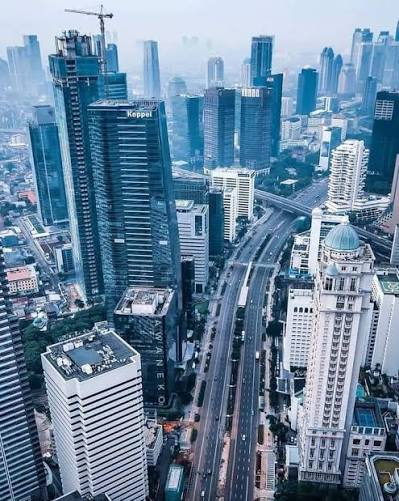
Indonesia's threatened MSCI downgrade is indeed a serious warning for the local stock market. First things first though: MSCI’s core stated concern was lack of meaningful enforcement. Understandable. However, the local regulator is already showing concrete signs that it is willing to enforce.
On 15 October, MSCI announced a consultation on moving Indonesia from Emerging Market to Standalone Market status (which means outside both the Emerging and the Frontier market indices).
As a reaction to the announcement, the Jakarta index fell 11.6% on the day after. The market is down more than 40% this year from its January peak and the local currency has also been under meaningful pressure this year.
Still, Indonesia is my favourite market in the region right now.
Here is how I look at it: what MSCI actually said, what has been done so far, and what still needs to happen.
What MSCI actually said
MSCI first flagged its concerns about the investability of Indonesian equities in January 2026. In June it said it would launch a consultation if sufficient progress was not visible by the November index review. It then launched the consultation a month early.
MSCI gives three reasons: "Persistent opacity in shareholding structures", "suspected coordinated trading behavior", and a "lack of evidence of meaningful enforcement". In practice, this means foreign investors could not see who really owned the shares they were buying, some share prices were being moved by coordinated groups, and nobody was being punished for it.
Market participants can send feedback until 30 April 2027, and MSCI will announce a decision on or before 30 June 2027. Until then, no Indonesian stock gets a higher weight, no new names are added to the investable index, and names flagged for high shareholding concentration keep being removed.
What has been done since January
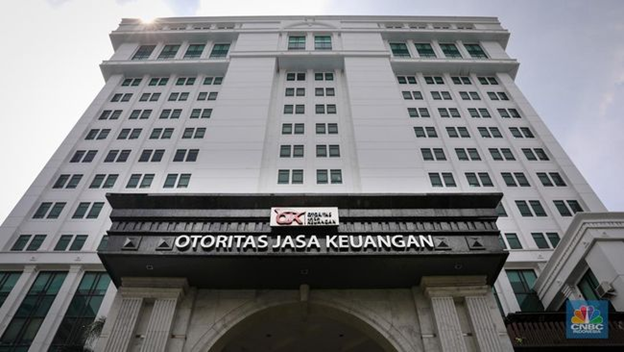
After the January warning, the head of the exchange resigned and was replaced. The regulator OJK (Indonesia’s Financial Services Authority) sent a reform package to MSCI in February, and the measures are now rolling out. The minimum free float to stay listed is being doubled from 7.5% to 15%. Every shareholder above 1% of a listed company has to be disclosed, and the investor classification system was expanded from 9 to 37 categories so that it is clearer who actually owns what. In April, the exchange published a list of stocks with high shareholding concentration, and last week it added a long list of companies to it.
Then came Friday 16 October, the day the MSCI announcement hit the Jakarta market. OJK fined the parties behind three listed companies a total of 2.1 tnIDR (approx. 116 mUSD). The largest fine, 1.5 tnIDR, was for a scheme that OJK says ran from 2023 to 2026 and significantly raised the price of one stock. The other two were for violations in how IPO shares were allocated. The sanctions reach the ultimate beneficial owners. In addition, the regulator has summoned 12 brokerage directors, 15 individuals and 11 foreign legal entities, and the police have opened their own investigation.
To put this range of actions in perspective, in the four years from 2022 to January 2026, the OJK had only fined for stock price manipulation a total of 240 bnIDR (c. 13 mUSD) across 151 parties, ever. That one day was almost nine times the fines of the previous four years - i.e. more or less exactly what MSCI was asking for when they stated "lack of evidence of meaningful enforcement".
Finally, to avoid potential structural conflicts of interest around the Indonesian stock exchange, it has in short order been de-mutualized during this year. Also not an easy thing to pull off at this speed.
My current takeaway - this could have been a very different problem
This could have been an administration, a local financial regulator and a management of the stock exchange that refuses to really take action, and that is just going to continue to refuse.
This administration and the stock exchange are reacting to the pressure, taking steps, and are ready to enforce (in all fairness, even at the highest degree of willingness, government investigations of wrongdoing will and should take some time to complete). The president and the regulatory bodies moved quickly once the MSCI downgrade risk became public, and a number of measures followed in a short period of time.
From here, it is just a question of if the local authorities can accelerate enforcement actions enough to satisfy MSCI.
If the authorities continue down its current enforcement-centric path, at the most recent pace, my sense is that we are already on the path of avoiding the downgrade. That being said, the pace of enforcement can of course start to slip and then the downgrade risk is of course real.
What still needs to be done, mostly enforcement
The rules are now largely in place. In MSCI's words, what investors want now is "consistent implementation and evidence of sustained material impact".
In practice, this means that the coordinated trading has to actually stop, and MSCI has to be able to see that it stopped in how the flagged stocks trade. The 1% ownership disclosures have to be complete and in use, which is why MSCI says it will use that data to adjust its own free float estimates. The fines of 16th of October have to be followed by more cases, by the money actually being collected, and by convictions where the police investigation leads there, so that this was not just symbolic.
What it means if you are investing into Indonesia with a long term view
For 10-12 out of the 15 years I have lived in Southeast Asia, Indonesia was the outstanding investor darling, and Vietnam was sort of a backwater.
It did not matter which asset class you looked at, Indonesia received most of the capital and had the highest multiples (listed, private equity, VC, etc). Vietnam was too small an economy and not really investable for most investors.
Then this flipped on its head, and now everybody is super keen to invest in Vietnam “the outstanding growth engine of the region”, while Indonesia is suddenly in “investor dog house” while the global headlines for Indonesia is somewhere close to “game over”, “forget about Indonesia”, “Indonesia is uninvestible”.
Both those narratives are significantly exaggerated.
When I talk to Indonesian companies, particularly the market-leading consumer-facing companies on the stock exchange, the picture is very different. Yes, it has been a politically turbulent period and everybody is a little bit on the edge of their seat. However, meeting and talking to the key business operators in Jakarta, it turns out that the core business of these companies are not that affected, and I still hear them describe short-term strong profit growth as well as a long term growth and penetration case that is by and large intact.
When we analyze listed investment cases in Indonesia at the moment, we come up with the strongest expected returns we have ever seen with Endurance Capital’s strategy in Southeast Asia, with its 3-5 year investment horizon (we are of course going to be wrong in many places, but we are at least equally wrong as we always have been - so in a relative comparison over time, it is likely fairly indicative of the attractiveness of current valuation levels).
The market has dropped by c. 40% from its January peak, valuation levels are at multi-decade lows, the underlying long term consumer growth trajectory of the country has not materially changed and there is “blood in the streets”. My conviction is that there is little downside left from here. There are also instructive lessons to derive from other markets suffering through eerily similar episodes in the past (e.g. Malaysia in the end of the 90s) - these tell us that the local market bottoms come right around a final warning like the one MSCI issued on 15th of October (not at a time of a potential confirmed downgrade, if it ever came to that).
Now is the time to double down on Indonesian listed equities.
Key to follow
First, to keep track of this evolving situation, you need to keep track of the enforcement actions, rather than the index level. How many and how big fines will be announced from here to June 2027? Whether the fines are actually collected, and whether the flagged stocks start trading like normal stocks or not. That is what MSCI will be looking for and the good news is that it’s fairly straightforward to track.
Second, your investment time horizon around a market like Indonesia determines directly whether you are exposed to the short-term volatility driven by politics and media headlines, or to the steadily growing long-term income per capita of a country of a multi 100 million population like Indonesia. With a one-year horizon you are exposed to MSCI and the next headline. With five years you are mostly exposed to the long-term rise in incomes and consumption of close to 300 million people.
I am going to Indonesia much more often now, and we are spending more of our research hours there, because every unit of research invested there holds unusually high returns at the moment.
Christopher B. Beselin
Investing, compounding & exiting
PS. If you would like to discuss where the Indonesian market stands from a long-term investment perspective, book a call here https://calendly.com/christopher-beselin/30min.
Christopher B. Beselin is the Chief Investment Officer of Endurance Capital. The views & opinions expressed in this newsletter are for informational and educational purposes only and should not be considered investment advice.